Wednesday, October 28

Helping Middle School Students Build Science Vocabulary with Puzzles

Science vocabulary can be challenging for middle school students. When students struggle to understand scientific terms, it can become harder for them to follow lessons, understand concepts, and explain what they have learned. Providing extra opportunities to practice vocabulary can help build familiarity and confidence.

The Middle School Science Vocabulary Puzzle Book from Sandy’s Science was created to give teachers an additional resource to support students who need more practice, while also providing enrichment opportunities for students ready for a challenge.

Four Puzzle Formats to Support Different Needs

With 300 puzzles covering 75 science topics, this book offers four formats to help students practice vocabulary in different ways:

  • Word Search: Recognize and identify key Science terms.

  • Cryptogram: Practice vocabulary while developing decoding and problem-solving skills.

  • Crossword with Word Bank: Connect Science terms with their meanings.

  • Hidden Message Puzzle: Challenge students to unscramble Science terms and reveal a hidden message.

Having different formats allows teachers to select activities that match students’ needs, reinforce classroom instruction, and provide additional practice without relying on vocabulary lists alone.

An Extra Resource for the Classroom

These puzzles can be used for small-group support, bell ringers, independent practice, review, early finishers, or enrichment. They also provide a convenient option for students who benefit from revisiting vocabulary at their own pace.

For students who struggle, puzzles offer another way to interact with Science terms. For students who need an extra challenge, the different formats provide opportunities to extend their practice.

You don't have to replace your existing lessons. Simply add another way for students to practice, review, and build confidence.

The Middle School Science Vocabulary Puzzle Book is designed for grades 6-8 and offers teachers a flexible resource to supplement Science instruction, reinforce essential vocabulary, and support learners with different needs.

300 puzzles. 75 Science topics.

Four ways to practice.

More opportunities for students to succeed!

Saturday, August 15

First Day of Middle School Science: 3 Ideas to Start the Year Strong

The first day of middle school Science is all about setting the tone for the year. You want students to feel welcome, excited about Science, and ready to learn but you also need to establish important safety expectations from day one.

These 3 activities are a great way to make the first day engaging while introducing students to the routines and expectations they'll need all year long.

1. Science Safety Scavenger Hunt

Get students moving around the classroom with a Science Safety Scavenger Hunt!

Make a list of safety items around the classroom such as:

  • Fire extinguisher
  • Fire blanket
  • Eyewash station
  • Safety goggles
  • Garbage can
  • Container for broken glass
  • First aid kit

Students work in pairs or small groups to find the information and answer questions about what they discover.

This is a great way to introduce your safety expectations while also getting students familiar with their new Science classroom. 

Teacher tip: Have your Science Safety Rules Anchor Charts posted before students arrive so they can begin using it as a resource during the scavenger hunt and throughout the year.

2. Complete a Science Safety Breakout Challenge!

Free!
Print & Digital *Includes rule posters for classroom display

Once students have explored the classroom and learned some basic safety expectations, challenge them with a Science Safety Breakout Challenge!

Students work in teams to solve puzzles, answer questions, and complete challenges related to Science classroom and laboratory safety. Along the way, they'll practice communication, collaboration, and problem-solving.

It's a much more memorable way to introduce safety than simply handing students a list of rules and asking them to read it.

3. Create a Science Safety Symbol

Let students get creative with safety by having them design their own Science safety symbol.

Activity & Bulletin Board Letters to make a display

After learning about common safety symbols, challenge students to create a symbol that communicates a Science classroom safety rule or potential hazard. They can draw their symbol and explain what it means, what it represents, and what someone should do when they see it.

This activity gives you a quick way to see what students understand while allowing them to bring some creativity into the first day of Science. Once students finish their safety symbols, turn their work into a Science Safety Bulletin Board! Displaying their creations gives students ownership of the classroom and creates a colorful, student-made reminder of the safety expectations you'll be using throughout the year.

Don't Forget Your Safety Anchor Chart!

While posting a safety chart isn't an activity itself, it's an important part of your first-day setup. Have your Science Safety Rules Anchor Chart displayed before students arrive so it becomes a resource students can refer to during all lab activities.

You can continue referring to the chart throughout the year, especially before labs and hands-on investigations. The goal is to make safety an ongoing part of your classroom culture not just something students learn during the first week of school.

Start Your Year with Science!

The first day doesn't have to be filled with rules, procedures, and paperwork. With a safety scavenger hunt, safety breakout challenge and creative safety symbol activity, students can start the year by moving, collaborating, creating, and learning what it means to be safe scientists.

It's a fun and meaningful way to make your first day of middle school Science one students will remember!


Saturday, August 8

Teaching 3rd Graders How to Be a Scientist

Looking for a fun and meaningful way to kick off the school year? Start by teaching your 3rd graders what it really means to be a scientist!

The beginning of the school year is the perfect time to introduce students to the idea that scientists are curious, ask questions, make observations, and investigate the world around them. Before jumping into your first Science unit, spend some time building excitement about what it means to think like a scientist.

One of my favorite ways to start the year is with the book What Is a Scientist? by Barbara Lehn. This simple, engaging book is a great introduction to the many ways scientists work and the different kinds of scientists who help us learn about our world.

Start with a Anchor Chart and Read-Aloud

Begin by reading What Is a Scientist? together as a class. You can also show a video version of the book if you'd like to give students a different way to engage with the story.

As you read, pause to talk about what the scientists in the book are doing. Ask questions such as:

  • What do scientists do?
  • What kinds of questions do scientists ask?
  • What tools might scientists use?
  • Do scientists all work in the same places?
  • What makes someone a scientist?

This is a great opportunity to help students understand that there isn't just one way to be a scientist!

Create a Scientist Booklet Foldable

Booklet, Matching & Anchor Charts
After reading, students can create a scientist booklet foldable with a cloze reading passage and matching on the characteristics & types of scientists.

The foldable gives students a hands-on way to organize important information about scientists and their work. Students can refer back to their booklets throughout the year.

Hands-on activities like this are especially helpful at the beginning of the year because students are learning routines while also creating something they can be proud of.

Explore Different Types of Scientists

Next, introduce students to some of the different types of scientists they may encounter throughout the year.

This is a great chance to show students that science careers are incredibly diverse. Depending on your curriculum, you might introduce scientists such as:

  • Arachnologist
  • Archaeologist
  • Astronomer
  • Audiologist
  • Biologist
  • Botanist
  • Chemist
  • Ecologist
  • Entomologist
  • Geologist
  • Herpetologist
  • Ichthyologist
  • Immunologist
  • Marine biologist
  • Meteorologist
  • Microbiologist
  • Ornithologist
  • Paleontologist
  • Physicist
  • Zoologist

Students are often surprised to discover just how many different kinds of scientists there are!

Make It a Matching Game!

Turn learning about scientists into a fun matching game.

Give students cards featuring different types of scientists and cards describing what each scientist studies or does. Students work individually, with partners, or in small groups to match the scientist with the correct description.

This activity is a fun way to reinforce vocabulary while getting students talking about Science.

You can even turn it into a quick review game later in the year!

A Great Way to Start the Year!

Starting the year with a lesson on what it means to be a scientist sets a positive tone for your entire Science classroom.

Rather than simply telling students that they will be learning Science, you're showing them that they can actually be scientists themselves!

They can ask questions.
They can make observations.
They can investigate.
They can make predictions.
They can collect evidence.
They can learn from their mistakes.

And most importantly, they can be curious about the world around them.

This simple combination of a read-aloud, a booklet foldable, and a scientist matching game is a fun and engaging way to get your 3rd graders excited about Science from day one!


Teaching the Nature of Science Without a Textbook

One of the things I always want my students to understand is that Science is so much more than a list of facts to memorize. Before they can dive into topics like ecosystems, forces, cells, or space, I want them to understand the foundation of Science - how scientists observe, measure, analyze data, create models, and use evidence to explain the world around them.

The problem is that textbooks often don’t spend enough time on these important skills.

Most Science textbooks include a short section about the scientific method or a few pages about graphs and measurement, but these concepts are usually introduced quickly and then students are expected to apply them throughout the year. I found myself wanting my students to have a stronger understanding of how Science works before asking them to use these skills in labs, investigations, and real-world problem solving.

That is why I created my Nature of Science Booklet Foldable Bundle.

I wanted a resource that would allow my students to slow down, explore each concept, and build a strong foundation they could refer back to all year long without needing a textbook or a collection of extra resources.

This bundle includes everything you need to introduce students to the skills scientists use every day:

  • Observations
  • Scientific Measurement
  • Scientific Math Skills and Tools
  • Graphs
  • Scientific Method
  • Scientific Thinking
  • Scientific Models
  • Scientific Laws and Theories
  • Science and Society
Each topic includes an informational reading passage, comprehension questions, vocabulary practice, and a practice activity that students can add to their Science notebooks.

Another reason I love having this bundle ready to go is that it makes a great sub plan. When I am out of the classroom, I know my students can complete meaningful Science work independently without needing a textbook, extra materials, or complicated instructions for a substitute teacher.


Tuesday, June 17

States and Capitols Themed Crossword

Completing crossword puzzles is more than just a fun brain teaser - it's a powerful learning tool! 

Grab a pencil and dive into this crossword on the US States and capitals.


Crosswords promote critical thinking and spelling accuracy while keeping students engaged and challenged—and best of all, they make learning fun!
Click here for a ready made activity!


Saturday, February 22

Dot to Dot Game

 Also called dots and dashes, dots and boxes or pigs in a pen.  This is a really old game by French mathematician Édouard Lucas.  Now it can be educational and fun.  I first saw this by Rebecca at Unbroken Bonds and adapted it for my students.  

I put descriptions in each box (rotation vs. revolution) but you could make a generic grid and use it with any worksheet.

Students take turns drawing lines.  When they complete a box, they get a point if they can answer the question.  Either rotation or revolution or a question from a worksheet.

This makes a great early finisher activity or as part of a station rotation.


Monday, October 7

Hurricane Resource

During hurricane season, it's important for students to understand more about these powerful storms and how they form. 

To help students prepare and learn, we're excited to share an anchor chart and booklet foldable that covers key facts about hurricanes including:

  • Where & how hurricanes form
  • Hurricane season dates 
  • 3 main parts of a hurricane
  • Differences between the terms: hurricane, typhoon & cyclone
  • Hurricane names
  • The Saffir-Simpson hurricane scale

With this resource, students can better understand hurricanes and stay informed during the hurricane season. 

Stay safe and be prepared!

Download the resource on hurricanes here.

Hope this helps students feel more confident and knowledgeable about hurricanes!


Friday, September 13

4 Ways to Use your Classroom Display as an Activity

I display various anchor charts around my classroom such as these Science Measurement Tools Anchor Charts.


Click image if you're looking for ready-to-use materials

Depending on the amount of time we have, students can do one of these activities: 
  1. Scavenger Hunt - Divide into teams.  Give students a list of tools and ask them to write down what it measures. *Extend by having teams find the actual tools after completing the list.
    • Thermometer - temperature
    • Spring Scale - weight
    • Balance - mass
    • Graduated Cylinder - liquid volume
    • Ruler - length
    • Stopwatch - time
  2. Interactive Lab Stations - Set up stations with measurement tools.  Students rotate through the stations using each tool to measure. 
  3. Poster Project - Students choose  a measurement tool and make their own chart explaining how to properly use it. *Click here  for examples
  4. Exit Ticket - Students answer a question about a measurement tool before leaving class.  Write the question on the board and have students write down their answer.
    • What does a ruler measure?  length
    • What Science tool would you use to measure liquid volume? graduated cylinder
    • What Science tool measures how long something lasted? stopwatch
    • What Science tool uses the standard units grams (g) and kilograms (kg)? balance
    • What are the standard units does a thermometer use? Celsius or Kelvin (K)
    • What Science tool is used to measure the amount of gravity on an object? spring scale
My students like getting out of their seats and there's not much prep for most of these activities.


Wednesday, September 11

Boost Science Safety in the Classroom with Tools & Equipment Anchor Charts

Looking for a way to ensure your students understand and use science tools and safety equipment properly? This resource is perfect for you! 

The Science Tools & Safety Equipment Anchor Charts provide clear, visual references for middle schoolers. The charts cover essential lab tools and safety rules, making it easier for students to follow proper procedures during experiments. 

These charts can be displayed in your classroom or used as a teaching guide to reinforce safety protocols and tool identification.

Check it out here.


Use the Upcoming Lunar Eclipse to Engage Students

The next lunar eclipse (partial) will occur on Sept. 17-18, 2024, and it will be visible from the Americas, western Europe, and parts of Africa. To find out the times in your area, click this link.

One of the best strategies to help students understand and retain information about lunar eclipses is by using visual and hands-on tools. Here’s how you can incorporate these resources effectively:

1. Solar & Lunar Eclipse Anchor Charts
Start your lunar eclipse unit by displaying a large, colorful anchor charts that outlines important terms like "umbra," "penumbra”. Use simple diagrams to show the alignment of the Earth, Sun, and Moon during a lunar eclipse. Anchor charts can be left up for students to refer to throughout the lesson, serving as a helpful visual reminder.

2. Online Video
This short video allows students to visualize eclipses in action. It illustrates the shadow's movement across the moon including the umbra, penumbra and explains why the moon appears red.

3. Foldable Booklet
Foldables can help students review the phases of the moon, label a diagram of a lunar eclipse, and allow them to organize information in a fun and creative format. Students can fill out each section, reinforcing key concepts through active participation. This foldable also acts as a study tool they can revisit later.

4. Sorting Activity
To wrap up your lunar eclipse lesson using a sorting activity that allows students to compare and contrast solar and lunar eclipse facts. This not only checks for understanding but can also provide a collaborative learning opportunity if students work together to complete the activity.

If you're looking for ready-to-use materials, check out the lunar eclipse foldable booklet and anchor charts to save time while delivering a high-quality lesson.


Monday, August 5

Back to School Planning Checklist

Back to school already?

Time to make a list…

  • Supplies (sticky notes, tissues, a timer, pencils, highlighters, scissors, glue, pencil sharpener, clipboard, stapler, binder clips, dry erase markers, magnets, stamps, hand sanitizer, cleaning supplies - disinfecting wipes & paper towels)
  • Seating Charts (its hard for me to remember names so I stand at the door as students are coming in and show them the chart which is also on the board and help direct them) I also make a seating chart for my desk with student's pictures
I modified a standard seating chart from desks to lab tables in ppt.
I put students names in and can drag and drop to change seating arrangements.
  • 1st day activities with students

I'm starting with Lab Safety.  This also makes a great classroom display for Open House.  I review the safety procedures in the lab, let students try on aprons and goggles and demonstrate how to properly wear them then they make their own safety symbol.

Hope your year starts off great!


Back to School Science Escape Room - Easy & No Prep!

 My students love escape rooms!  I don't love the prep:(

These digital escape rooms are so easy to use and no prep! Just give your students 1 link (goes to a Google Site) or have them use the QR code (display on a document reader/projector or print the 1 page sheet and have them scan with their phones) they do the rest. Each clue leads to the next and they can't advance until the get the previous one correct. *Google Forms gives them as many tries as they need! 

Of course there is a print option which you can do as a traditional escape room where they solve one clue at a time or as a "Breakout" where you give them all the clues at once and they race to beat other teams.

Here are some other escape rooms that also use Google Sites/Forms and have a print option.  


I hope your students love them as much as mine!


Friday, July 12

Physical & Chemical Properties of Matter Game

Do you have a couple minutes at the end of class and want to review vocabulary?  Try Word Wall Pictionary!

We're working on the physical and chemical properties of matter.


Game Directions

  1. Divide into two teams. Each team sends 1 student to the board. *Students can also use individual “white boards” or paper
  2. Pick a word wall card and show the 2 students. They must draw pictures - no words or symbols.
  3. Set a timer timer for 30 seconds to one minute.
  4. While they are drawing, their team members try to guess the word. The first team to guess the word correctly wins a point and posts the word wall card on the board.
  5. The team with the most points wins.

I have a word wall board, you can use a blank wall, back of a door, cabinet doors etc. 


Check out these word wall sets:

Have Fun!

Tuesday, March 19

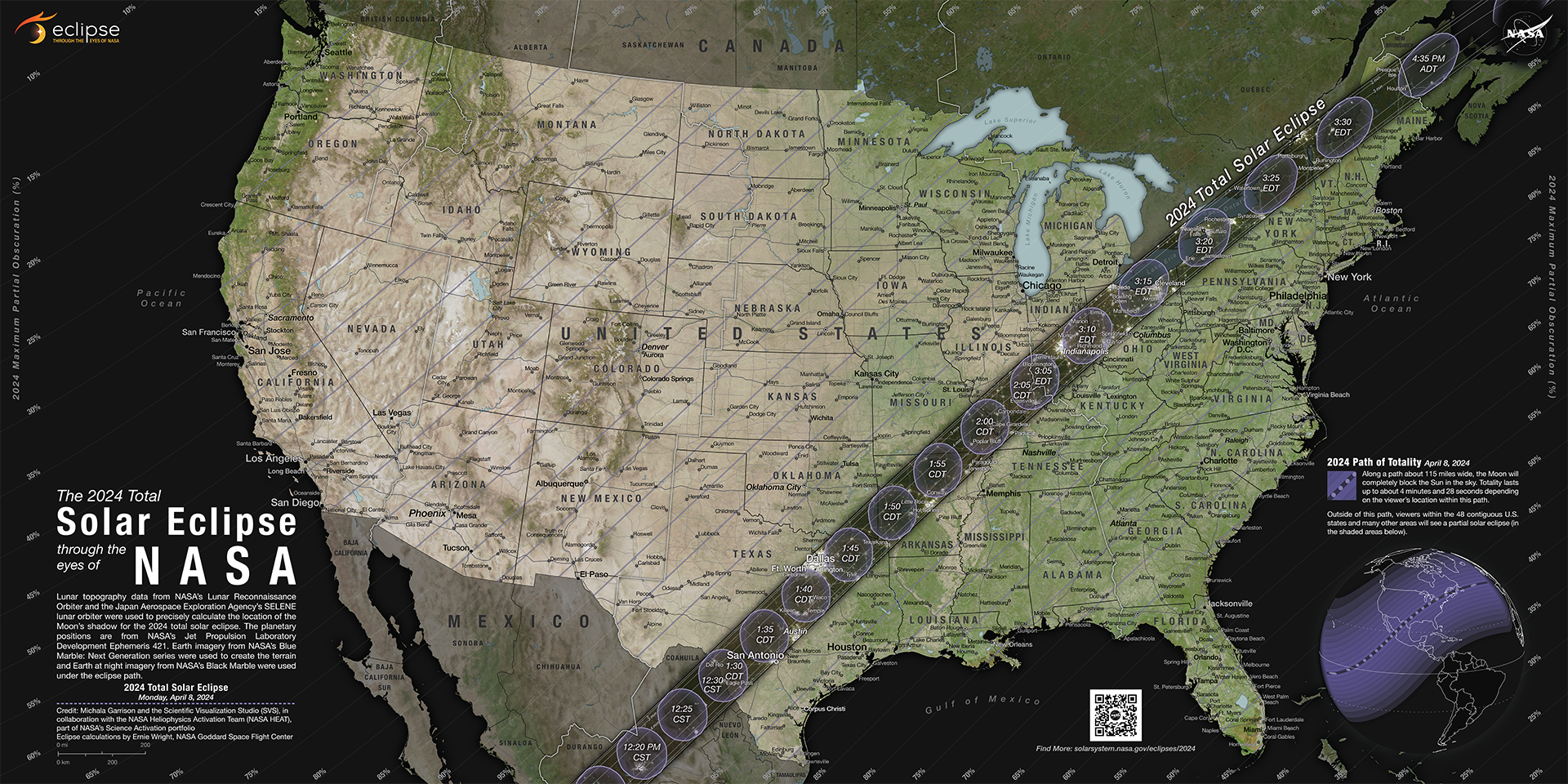
10 Activities for The Great North American Solar Eclipse on April 8, 2024

On Monday, April 8th, 2024, a total solar eclipse will cross North America.  The next opportunity to see a total solar eclipse of this magnitude in the US is 2045!

Here are 10 Activities to do with students: 
1. Watch a simulation of the eclipse - find the start and end time where you live or the closest place to where you live
2. Make vocabulary cards with definitions (astronomer, corona, Earth, eclipse, lunar eclipse, moon, partial eclipse, path, penumbra, phase, solar eclipse, Sun, totality, umbra)
3. Watch a video
4. Make an information foldable (Include: what is a solar eclipse, a solar eclipse diagram & how to observe a solar eclipse safely)
5. Color & label the Path of Totality

6. Make a Solar Eclipse anchor chart
7. Make a Phases of a Solar Eclipse anchor chart
8. Label a Solar Eclipse diagram
9. Complete a Solar Eclipse Word Search or Crossword
10. Make a "How to View the Solar Eclipse Safely" warning anchor chart

Many states will see a partial or total eclipse
Engage and inform your students for this exciting historic event!